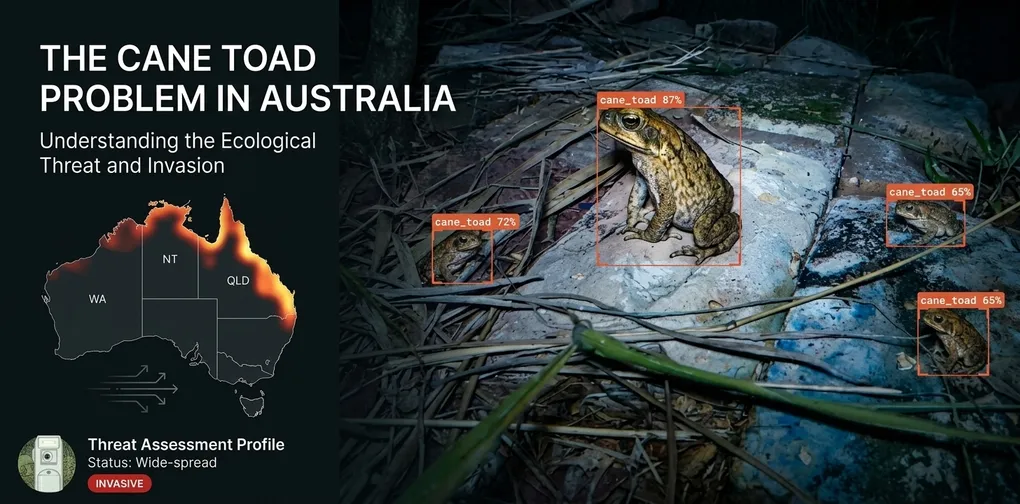
The Cane Toad Problem: How an Invasive Species Changed Australia
If you live anywhere in northern or eastern Australia, you already know the sound. That low, repetitive croaking that fills the yard every night after dark. Cane toads are one of the country’s biggest ecological disasters, and despite decades of effort, the problem is only getting worse.
There are now an estimated 200 million cane toads spread across the top half of Australia. They poison native wildlife, outcompete native frogs, and show no signs of slowing down. For property owners in affected areas, they are a nightly nuisance and a genuine danger to pets.
This post covers where they came from, why they are so destructive, and why the usual approaches have not been enough.
A Brief History
It all started with good intentions. In 1935, approximately 100 cane toads were imported into Australia and around 3,000 of their offspring were released near Gordonvale in far north Queensland. The idea was simple: the sugar cane industry had a beetle problem, and cane toads were known to eat beetles in their native Central and South America.
It did not work. The beetles lived high up on the cane stalks where the toads could not reach them. The toads, meanwhile, found plenty of other things to eat and no natural predators to keep them in check.
From those first releases, the population exploded. They now cover a vast stretch of the continent, from Queensland across the Northern Territory and into Western Australia. They spread at roughly 50 to 60 kilometres per year, and the front line is still moving.
Current estimates put the population at well over 200 million. In just under a century, a handful of toads turned into one of the most damaging invasive species introductions in history.
The Impact on Native Wildlife
Cane toads are poisonous at every stage of their life cycle. Eggs, tadpoles, and adults all carry toxins. For native animals that have never encountered these toxins before, the results have been devastating.
Quolls have been among the hardest hit. In some regions, northern quoll populations crashed after cane toads arrived. These small marsupial predators try to eat the toads and are killed by the poison.
Goannas and monitors have experienced similar large-scale die-offs. Some goanna populations have learned to avoid toads over time, but the initial impact on naive populations has been severe.
Freshwater crocodiles have seen significant population declines in some northern rivers where toads have moved in. Unlike saltwater crocs, freshwater crocodiles are small enough to eat toads and are vulnerable to the toxin.
Snakes, including death adders and king brown snakes, are also affected. Any predator that tries to eat a cane toad is at risk.
Domestic pets are frequently poisoned too. Dogs are particularly vulnerable. They mouth or bite toads out of curiosity, and the toxin can cause serious illness or death. If you have pets in a toad-affected area, it is something you need to be aware of.
Beyond the direct poisoning, cane toads also outcompete native frogs for food and habitat. They breed prolifically, eat almost anything, and dominate the spaces where native species used to thrive.
Why Traditional Methods Have Not Worked
Australians have been fighting cane toads for decades, and plenty of methods have been tried. The problem is not a lack of effort. It is the sheer scale of the challenge.
Hand-catching (toad busting) is effective on a local level. Community groups go out at night with torches and buckets, collecting toads by hand. It makes a real difference in a backyard or along a creek, but it cannot scale to deal with a population of 200 million that is spread across thousands of kilometres.
Trapping works in small areas but requires constant maintenance. Traps need to be checked, emptied, and reset regularly. They catch some toads, but not enough to dent the population.
Biological control has been a long-term research goal, but no approved biological control agent exists yet. Scientists have looked at parasites, viruses, and gene-drive technologies, but nothing has made it to deployment. The risks of unintended consequences with biological agents are significant, and rightly so.
Community drives play an important role in awareness and local management. Toad busting events, school programs, and local council initiatives all help. But even the most dedicated community groups cannot keep up with an animal that breeds as fast as the cane toad.
The core problem is reproduction. A single female cane toad can lay over 30,000 eggs in a single clutch, and they breed multiple times per year. No matter how many toads you remove, the next generation is already on its way.
The Challenge for Property Owners
For Australians living in cane toad territory, this is not an abstract environmental issue. It is a nightly reality.
Toads come out after dark, especially on warm, humid nights and after rain. They head straight for the things that attract them: pet water bowls, garden taps, irrigation lines, outdoor lights (which attract the insects they eat), and any standing water.
The traditional response is to head out with a torch and a bag after sunset, collecting toads by hand. It is unpleasant work. It is time-consuming. And no matter how many you collect tonight, more will be there tomorrow.
For anyone who has done this night after night, season after season, the frustration is real. You are fighting an animal that reproduces faster than you can catch it, and the population barely budges.
This is exactly the kind of problem that motivated us to build ToadTurret. A way to automate what thousands of Australians are already doing by hand every single night.
A Technology-Based Approach
While there is no silver bullet for the cane toad problem, technology is opening up new possibilities.
ToadTurret uses a camera and AI to identify cane toads automatically. The system has been trained on thousands of real toad images and, when connected to the cloud, can distinguish cane toads from many native frogs and animals. When it detects a cane toad, it responds with a targeted spray. When it detects anything else (a pet, a native frog, a bird) it pauses to keep them safe.
It is not going to solve the cane toad crisis on its own. No single device can do that. But it can take the nightly burden off property owners and provide consistent, automated monitoring that works while you sleep.
What You Can Do
Whether or not you have a ToadTurret, there are practical steps you can take:
- Report cane toad sightings to your local council or state authority. In Queensland, you can report through the Queensland Government’s pest reporting tools. Sighting data helps researchers track the spread and plan control efforts.
- Join a local toad busting group. Community-organised toad busts are a great way to make a difference in your local area and meet others dealing with the same problem.
- Remove toad-attracting features from your yard where possible. Cover pet water bowls overnight, fix dripping taps, and consider motion-activated lighting instead of permanent outdoor lights.
- Keep pets inside after dark, especially during the warmer months when toads are most active. If your dog does mouth a toad, rinse their mouth with water immediately and contact your vet.
- Consider automated solutions like ToadTurret for ongoing, hands-free monitoring and response.
- Learn about humane control methods. If you are catching toads by hand, follow the National Standard Operating Procedure (NATSOP-CAN001) guidelines for humane cane toad management. These are available from your state government.
The cane toad problem is not going away any time soon. But with a combination of community effort, research, and new technology, we can make a real difference, one backyard at a time.
If you have questions about ToadTurret or just want to chat about toads, get in touch. We are always happy to hear from fellow toad fighters.
Sources and Further Reading
- ABC News: Toad busters take up the fight against deadly pest in northern Australia
- Australian Government: The cane toad fact sheet
- Australian Government: Biological effects caused by cane toads
- Business Queensland: Cane toad biology, impacts and control
- Monash University: Long-term monitoring of freshwater crocodile declines following cane toad invasion
- PestSmart: National Standard Operating Procedure for field euthanasia of cane toads